


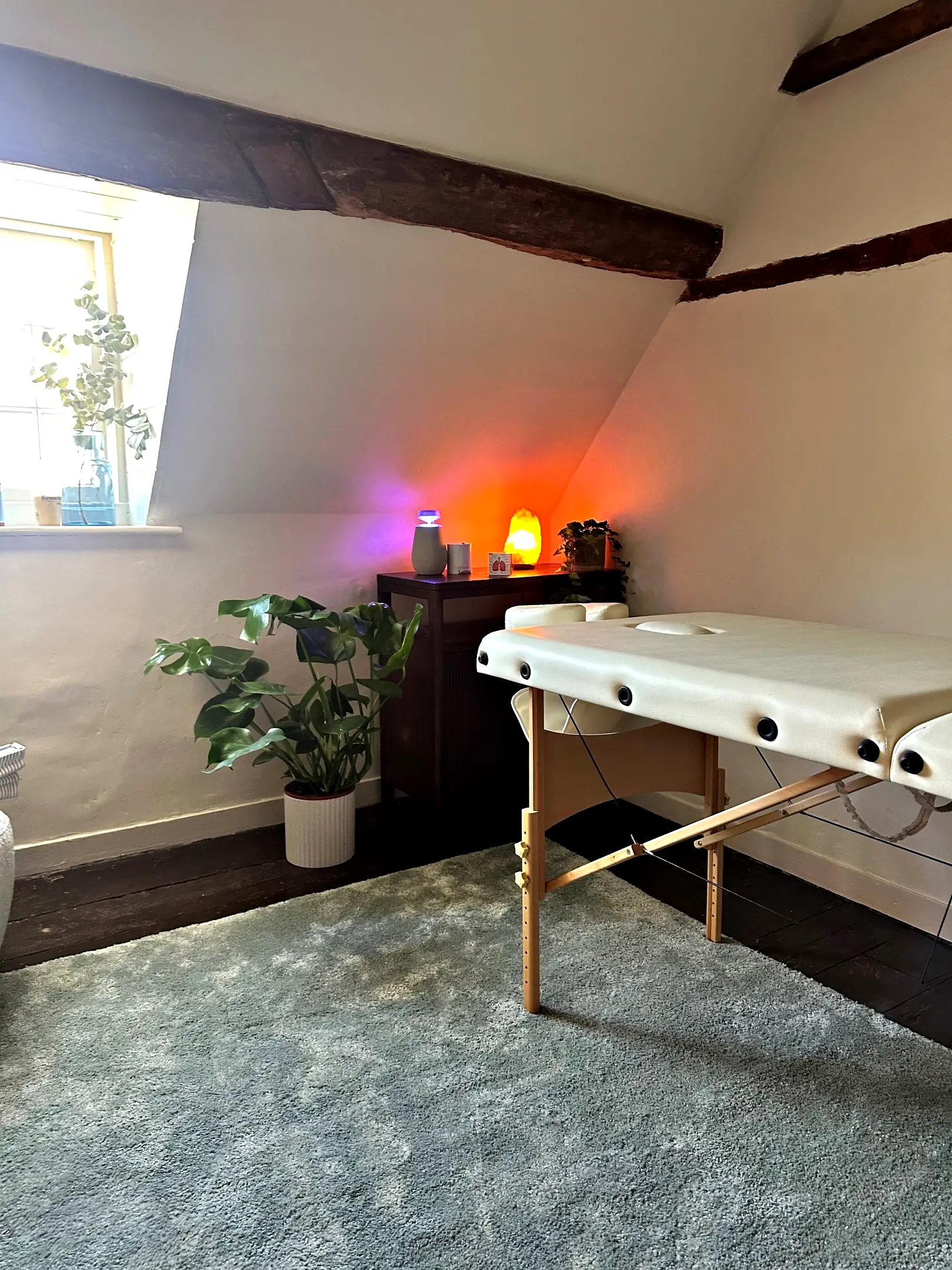

A Spine Inside a Nervous System
The spine is not a stack of bones. It is the housing for the central nervous system, the cord that carries every message between the brain and the rest of you. Spinal Flow Technique starts from there. It has its foundations in chiropractic science, but where a chiropractor might adjust a joint, Spinal Flow makes light contact at access points along the spine and lets the body release what it is holding.
The idea is that physical, chemical and emotional stress all settle in the spine, and that they settle in particular places. Those places are the seven gateways.
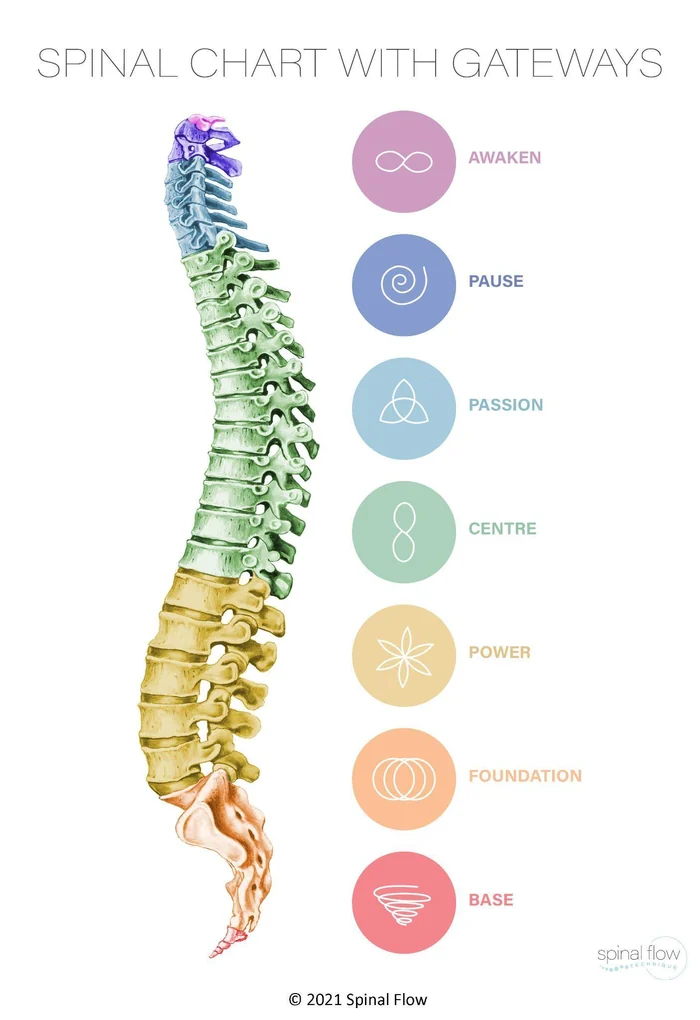
The Seven Gateways, Top to Bottom
Awaken, at the cranium, the centre of our true nature and life force. Pause, at the top of the neck where the head meets the spine, the centre of our self talk and thoughts. Passion, through the neck and shoulders, where we speak our truth or hold it back. Centre, the mid back, the ribs and the chest, where the heart lives. Power, the lower back, the centre that gets us through life. Foundation, the sacrum and pelvis, the place we move forward from. And Base, the tailbone, the centre of fight or flight and our stress response.
When I assess someone I am looking, and feeling, for where the flow is blocked. A blocked gateway shows in posture, in the way the body holds itself, in the tension I can feel under a very light touch. The spine visual on this page lets you tap each one and read what tends to settle there.
Nothing is cracked. Nothing is forced. The spine already knows how to flow; my job is to remind it.
Liane
What a Session Is Actually Like
You lie face down, fully clothed, on the couch. I make gentle contact with the access points along your spine, and I hold. That is more or less it, from the outside. From the inside people describe warmth, a sense of the body letting go, sometimes a twitch or a deep sigh as something releases, and very often sleep. Sessions are thirty minutes after your first consultation, and Spinal Flow works best little and often, so most people come weekly to begin with.
At your first visit I take a full posture assessment and photos. At your twelfth session I take them again, so you can see the change yourself rather than take my word for it. I am not a chiropractor, an osteopath or a physiotherapist, and Spinal Flow is not a medical treatment or a diagnosis; anything new, severe or getting worse needs your GP first.
Why Little and Often
People sometimes ask why the sessions are short and why I suggest coming weekly rather than booking one long appointment. It is because the nervous system learns by repetition. A light contact that the body accepts, repeated over weeks, does more than a strong intervention it braces against. Most people book a package of six or twelve for that reason, and the posture photos at session twelve are where they usually see it.
Between sessions I ask people to notice small things: how they sleep, how the neck feels at the end of a desk day, whether the old twinge turns up on schedule. Those are the changes that tend to arrive first, quietly, before the photos catch up.
Who It Is For
Anyone with a spine, which is everyone. People come with neck, back and hip pain, migraines, digestive trouble, sports injuries, chronic tiredness, stress and anxiety. Parents bring babies with colic and children who cannot settle. It is safe during pregnancy and gentle enough for the elderly. What I notice most is that when the flow returns, people feel it in more places than the one they came about.
Before Your First Spinal Flow Session
- Wear normal, comfortable clothes. You stay fully dressed.
- Allow seventy minutes for the consultation, the posture photos and your first session.
- Tell me about any conditions, operations or medication when you book.
- Come with no expectations. Most people are surprised by how little I seem to do, and by how much they feel.
If you would like to try it, the first consultation and session is £70, sessions after that are £45, and packages of six and twelve are on the booking page. If you would rather ask a question first, WhatsApp me.